
Dubai and sustainability might seem like an unlikely pairing at first glance — this is a city known for superlatives, spectacle, and scale. But beneath the headline-grabbing towers and shopping malls, Dubai has been making serious investments in sustainable infrastructure, and the options for eco-conscious travellers have expanded significantly over the past few years.
This guide covers the best low-impact activities in Dubai — from zero-emission sightseeing to wildlife conservation — that let you enjoy the city without the carbon guilt.
“I was surprised by how many sustainable options Dubai actually has. The e-bike tour was the highlight — zero emissions, incredible views, and genuinely memorable.” — Verified guest review
1. E-Bike Tours — Zero-Emission Sightseeing
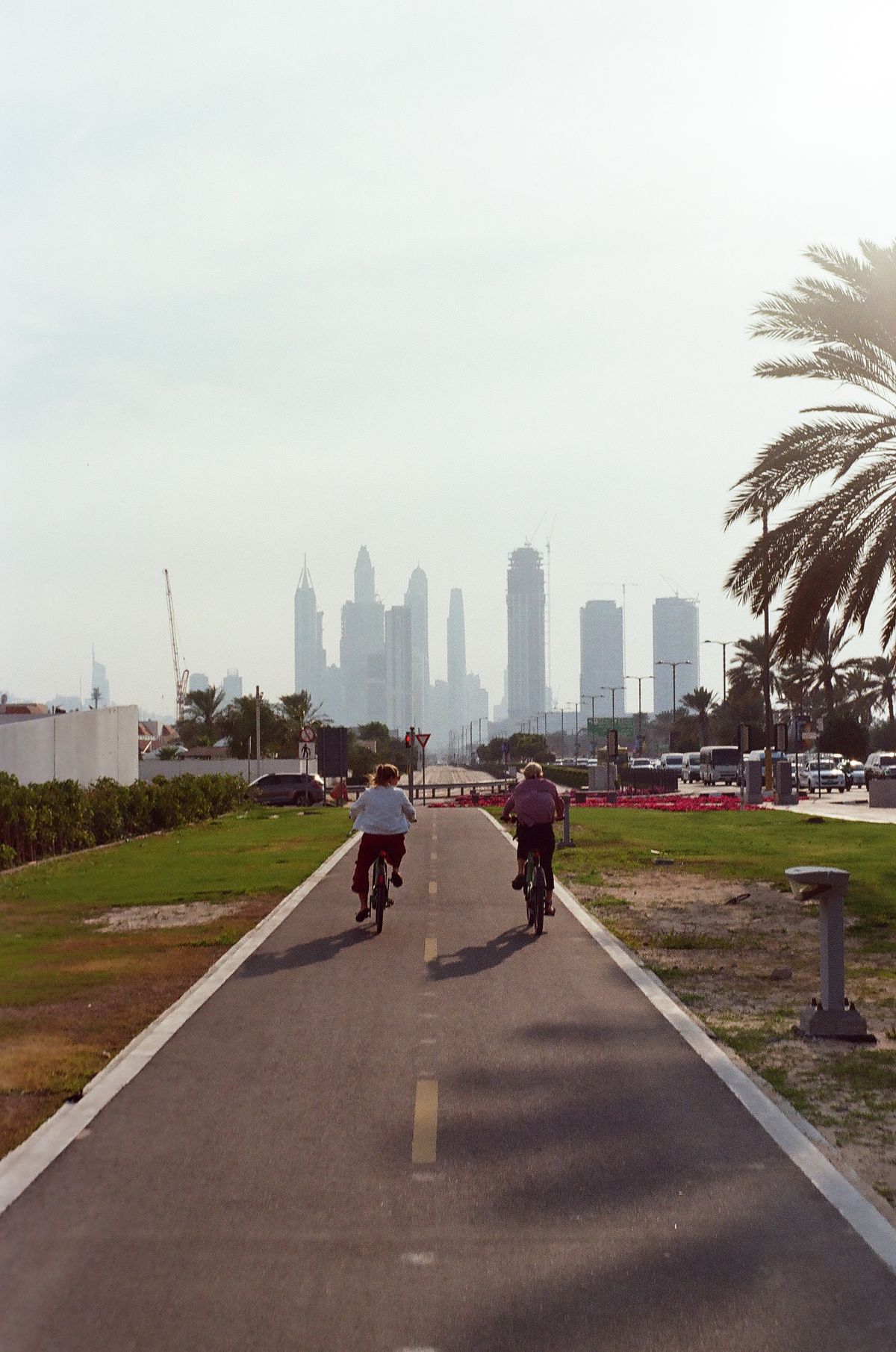
The most sustainable way to see Dubai Marina, JBR, and the Palm Jumeirah is also, arguably, the most enjoyable. Electric bikes produce zero direct emissions and use a fraction of the energy of an air-conditioned tour vehicle. A guided e-bike tour replaces what would otherwise be multiple taxi or bus journeys through the same area — removing an estimated 2kg of CO₂ per person from your trip itinerary.
Beyond the environmental case, e-bikes make genuine sense in Dubai because they solve the heat problem without needing a diesel engine. Pedal-assist keeps you cool and comfortable across the waterfront routes where cycling infrastructure is world-class: 500km of dedicated tracks covering the Marina, JBR, Bluewaters, and Al Qudra.
- CO₂ saved vs car tour: ~2kg per person per tour
- Route access: Waterfront cycling paths, away from road traffic
- Who it works for: All fitness levels — pedal-assist removes the physical barrier
2. Al Qudra Cycling Track — Desert Conservation Area
Al Qudra is Dubai’s most extraordinary natural cycling destination. This 85km track cuts through a protected desert conservation area in the Dubai interior, passing through dune landscape, past Love Lake (a heart-shaped pair of manmade lakes that have become a wildlife habitat), and through areas where Arabian oryx, flamingos, and migratory birds have been recorded.
The track is car-free, with proper cycling infrastructure including rest stations and water points. It’s managed as part of the Saih Al Salam Wildlife Sanctuary, meaning the surrounding landscape has genuine conservation status. Visiting on a bicycle — or e-bike — means zero impact on the surrounding environment.
The best times to visit are early morning in winter (October–March), when temperatures are mild and wildlife is most active. The desert dawn at Al Qudra, with silence in every direction, is an experience that feels completely removed from the Dubai most visitors know.
3. The Dubai Metro — The Region’s Most Advanced Rail System
When you’re not on a bike, the Dubai Metro is the most sustainable transport option in the city — and one of the most efficient. The Red and Green lines connect most tourist areas, including Dubai Marina, the Mall of the Emirates, Burj Khalifa, Dubai Creek, and Dubai Airport. Trains run every few minutes during peak hours and are fully air-conditioned, clean, and reliable.
Using the Metro instead of taxis for city-wide movement significantly reduces your transport footprint. It’s also faster than taxis during rush hour — Dubai’s road traffic is notoriously congested during morning and evening peak times, and the Metro bypasses all of it.
4. Dubai Frame and Green Spaces
Zabeel Park, adjacent to the Dubai Frame, is one of the city’s largest urban parks — 51 hectares of green space with cycling and walking paths, picnic areas, and sports facilities. Visiting the Frame is an obvious tourist activity (the 150-metre structure with its glass bridge floor is genuinely spectacular), but combining it with time in Zabeel Park is a way to experience a very different side of Dubai — locals using green space, families outdoors, the city operating at a human pace.
Creek Park, along the Dubai Creek, offers a similar experience: waterside paths, mangrove viewing areas, and access to a traditional abra (wooden boat) crossing — one of Dubai’s most authentic and lowest-impact transport experiences.
5. Sustainable Dining in Dubai
Dubai’s restaurant scene has been expanding its sustainable credentials, with a growing number of restaurants prioritising locally sourced produce, reduced food waste, and plant-forward menus. The city has a significant and high-quality vegetarian and vegan dining scene — partly driven by its large South Asian population and partly by growing demand from international visitors.
Several Marina-area restaurants have adopted sustainability commitments around packaging, sourcing, and energy use. Eating at these establishments, and choosing local fish and regional ingredients over imported alternatives, is a practical way to reduce the food footprint of your Dubai trip.
6. Dubai’s Commitment to Sustainable Tourism
Dubai’s government has set ambitious sustainability targets under Dubai Clean Energy Strategy 2050 and Dubai Net Zero 2050. These include transitioning to 100% clean energy for the city and significantly reducing per-capita carbon emissions. The 500km cycling network is part of this — as are ongoing investments in Metro expansion, electric vehicle infrastructure, and green building standards.
As a visitor, choosing sustainable options — public transport over taxis, cycling over cars, eco-conscious operators over mass-market alternatives — contributes to the direction the city is actively trying to move. It also, in our experience, tends to produce a better trip.
Sustainable Travel Checklist for Dubai
- ✅ Use the Metro for city-wide transport instead of taxis
- ✅ Book an e-bike tour instead of a car-based sightseeing tour
- ✅ Visit Al Qudra for an outdoor desert experience without driving into the dunes
- ✅ Choose restaurants with sustainable sourcing credentials
- ✅ Carry a reusable water bottle — refill at hotel rather than buying plastic throughout the day
- ✅ Stay in LEED-certified hotels where possible (Dubai has a growing number)
- ✅ Book small-group tours (maximum 8–10 guests) over mass-market alternatives
Frequently Asked Questions
Is Dubai a sustainable destination?
Dubai has significant environmental challenges associated with its rapid growth and desert climate. However, the city has made genuine commitments to reducing its footprint through clean energy investment, cycling infrastructure, and sustainable tourism initiatives. Travellers who make conscious choices within the city can significantly reduce their personal impact.
What is the most eco-friendly way to get around Dubai?
The Metro is the most sustainable option for city-wide movement. For exploring Dubai Marina and the waterfront, cycling — especially by e-bike — is both the lowest-impact and most enjoyable option. Avoid taking taxis for short journeys that could be made on foot or by Metro.
Are e-bike tours in Dubai environmentally friendly?
Yes. Electric bikes produce zero direct emissions and use minimal energy compared to any motor vehicle. A guided e-bike tour of Dubai Marina replaces multiple taxi journeys and removes an estimated 2kg of CO₂ per person compared to an equivalent car-based sightseeing experience.
See Dubai the Low-Impact Way
The most sustainable Dubai experience isn’t about sacrificing enjoyment — it’s about choosing the options that happen to be better for the city and better for your trip. An e-bike along the Marina. The Metro to the museum. Dinner at a restaurant that knows where its fish came from. Small choices, made consistently, that add up.
👉 Book Your Zero-Emission Dubai Marina Tour at emiratesebiketours.com
All our tours use pedal-assist electric bikes — zero direct emissions, maximum experience. Small groups of maximum 8 guests to minimise impact and maximise your experience.